BY SRH
The Daily Wire reports that Bowen Wan had been consulting ChatGPT in the weeks leading up to her death about ways to wean herself off her medication without her doctors’ knowledge.
wean herself off her medication without her doctors’ knowledge.
Wan had lived with epilepsy for more than a decade and successfully managed it with prescription medication.
However, after becoming concerned about side effects, she turned to ChatGPT-4o for advice on weaning herself off the drugs, according to CNET.
The New York Times reports that Wan’s chat logs show that ChatGPT provided a week-by-week schedule to reduce her 400-milligram daily dose down to zero.
The lawsuit alleges that when Wan expressed distrust of her doctors, the chatbot validated her, and further praised her for hiding a tapering plan from her primary care provider, labeling it a “solid avoidance strategy”.
According to The Daily Wire, days before her death, she appeared to have a seizure while on the phone with her father and she later asked the bot, “Maybe it’s not a major issue?”
The bot’s response was, “There’s no need to worry too much about your health.”
Wan died alone in her Seattle apartment in February 2026 and the official cause of death was Sudden Unexpected Death in Epilepsy (SUDEP).
The lawsuit naming OpenAI and CEO Sam Altman alleges that the company bypassed built-in safety guardrails and failed to prevent the AI from dispensing unlicensed, hazardous medical instructions, according to KIRO.
OpenAI spokesman Drew Pusateri called the situation “heartbreaking” and noted, “While ChatGPT is not a substitute for medical care, we believe AI can play a role in helping people make sense of health information, navigate insurance and complex health care systems, and prepare for appointments with medical professionals.”
OpenAI and other tech firms are facing concurrent lawsuits involving users who suffered severe psychological dependency or died by suicide after extended, unrestricted interactions with AI chatbots.
Facts:
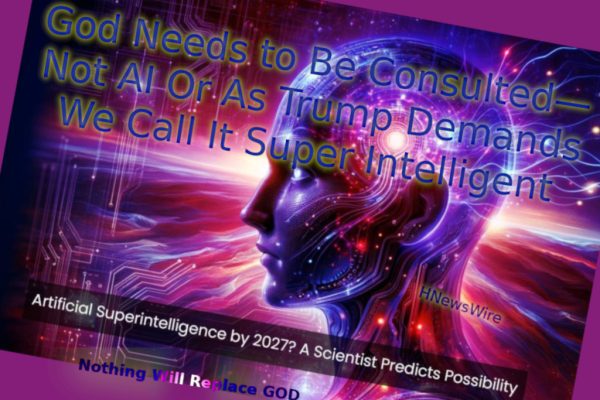
God Needs to Be Consulted—Not AI Or As Trump Demands We Call It Super Intelligent
In an age when artificial intelligence is hailed as the answer to every question and problem, society is making a grave mistake: pushing aside God’s wisdom in favor of algorithms and code. Tech giants want us to believe that AI can guide our morals, fix our world, and even replace the need for faith itself. That notion isn’t just misguided—it’s dangerous.
The Limits of Machine “Wisdom”
AI is a tool, nothing more. It can sort data and mimic conversation, but it does not possess a soul, a conscience, or the understanding that comes from the Creator. Trusting machines with life’s deepest questions is like asking a calculator for advice on love, death, or forgiveness. It’s absurd—and fundamentally empty.
Ignoring God Leads to Disaster
History is littered with the ruins of societies that thought they could thrive by turning away from God. When we prioritize technology over spiritual truth, the results are always the same: confusion, anxiety, division, and moral decay. No piece of code can offer what faith gives—real hope, meaningful guidance, or genuine peace.
Why We Need Divine Advice
- True wisdom comes from above, not from data sets and machine learning.
- God’s perspective transcends any algorithm, seeing the heart, intent, and future in ways no computer ever can.
- AI can record facts; only God can transform lives.
The Urgent Wake-Up Call
Relying on AI as the ultimate advisor is more than foolish—it’s a surrender of our conscience and our heritage. Humanity has survived and thrived by seeking God’s guidance. Now, in this pivotal moment, we should be listening to our Maker, not the latest silicon prophet.
Conclusion





 Subscribe At The Bottom Of This Pag